
Filter
Sort by:
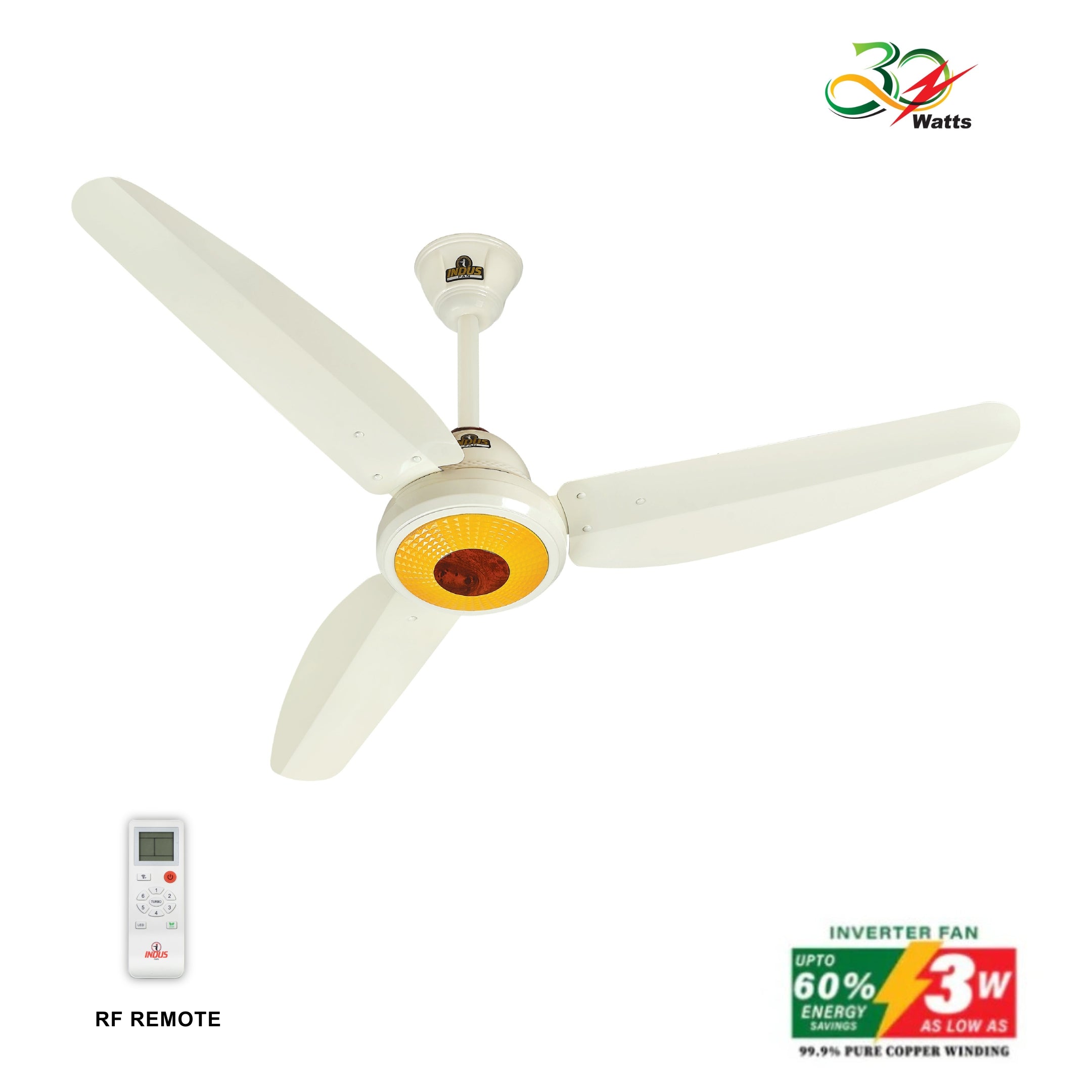
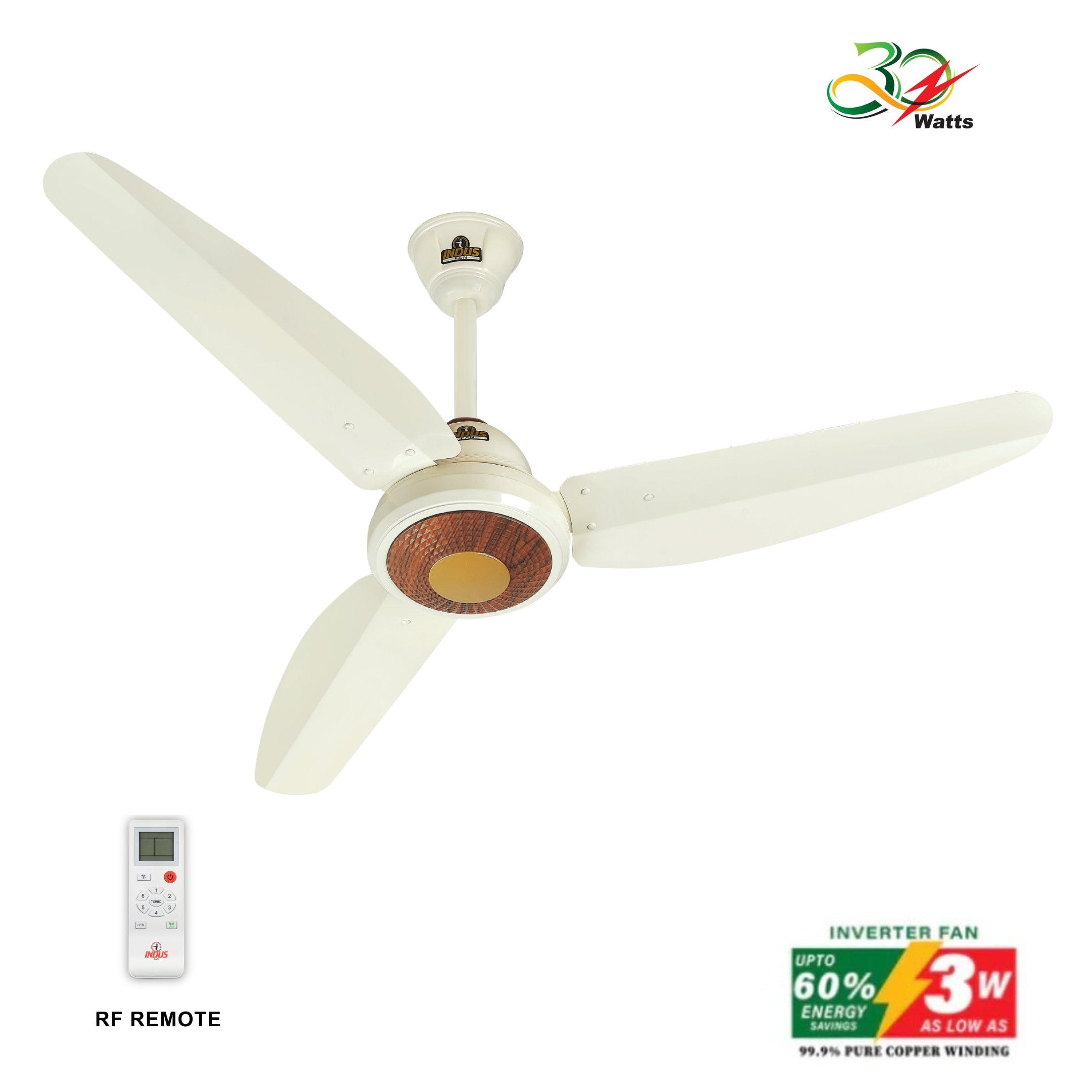
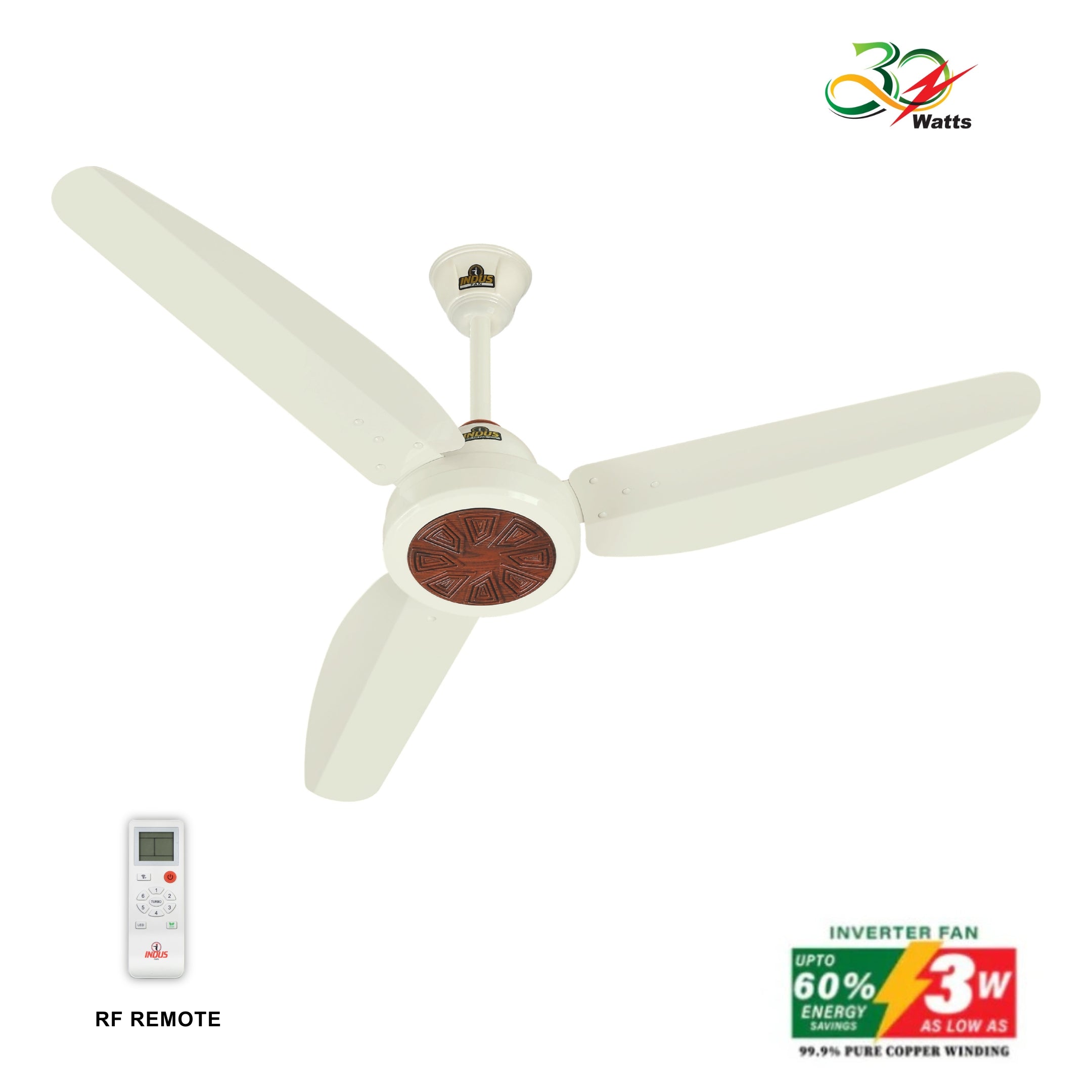
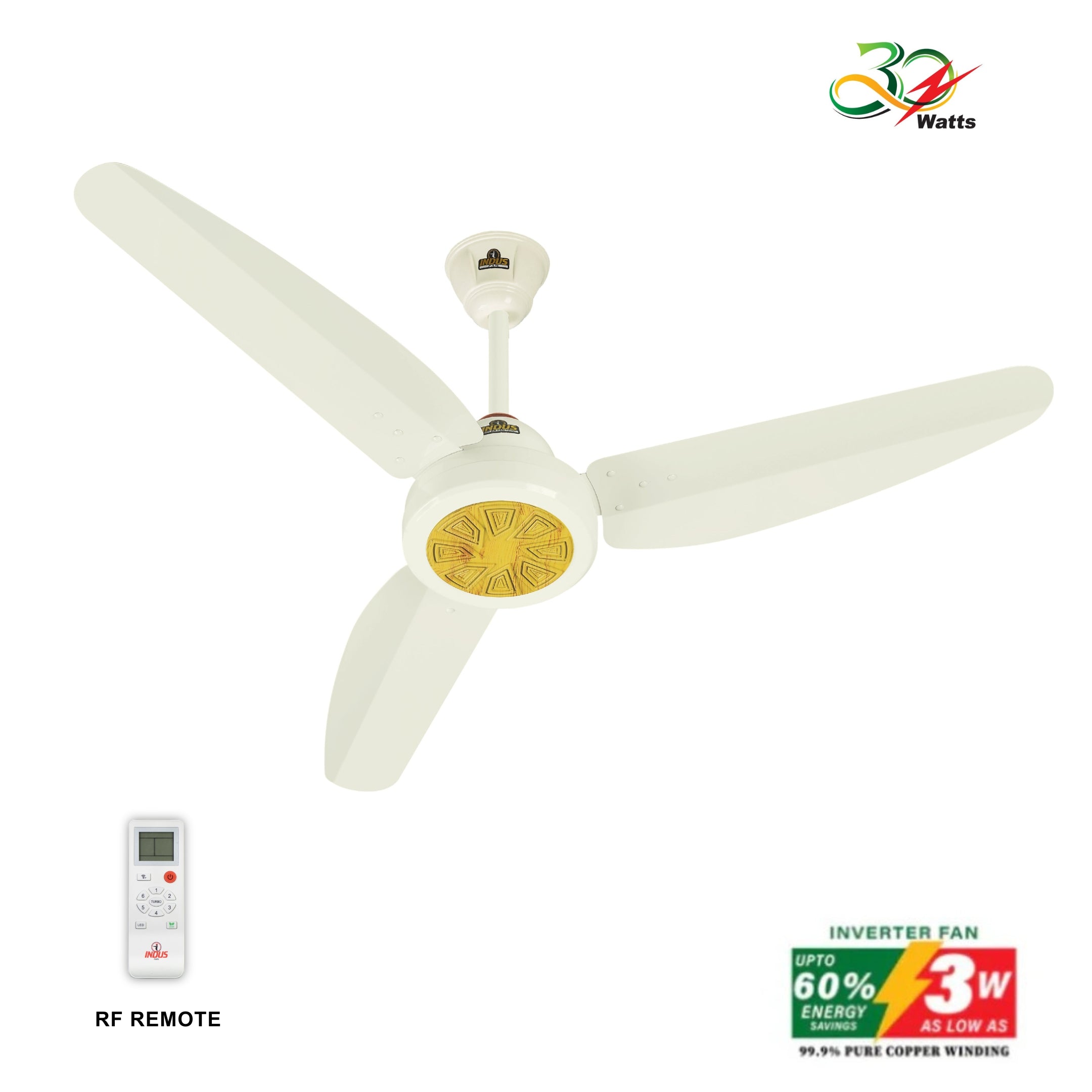
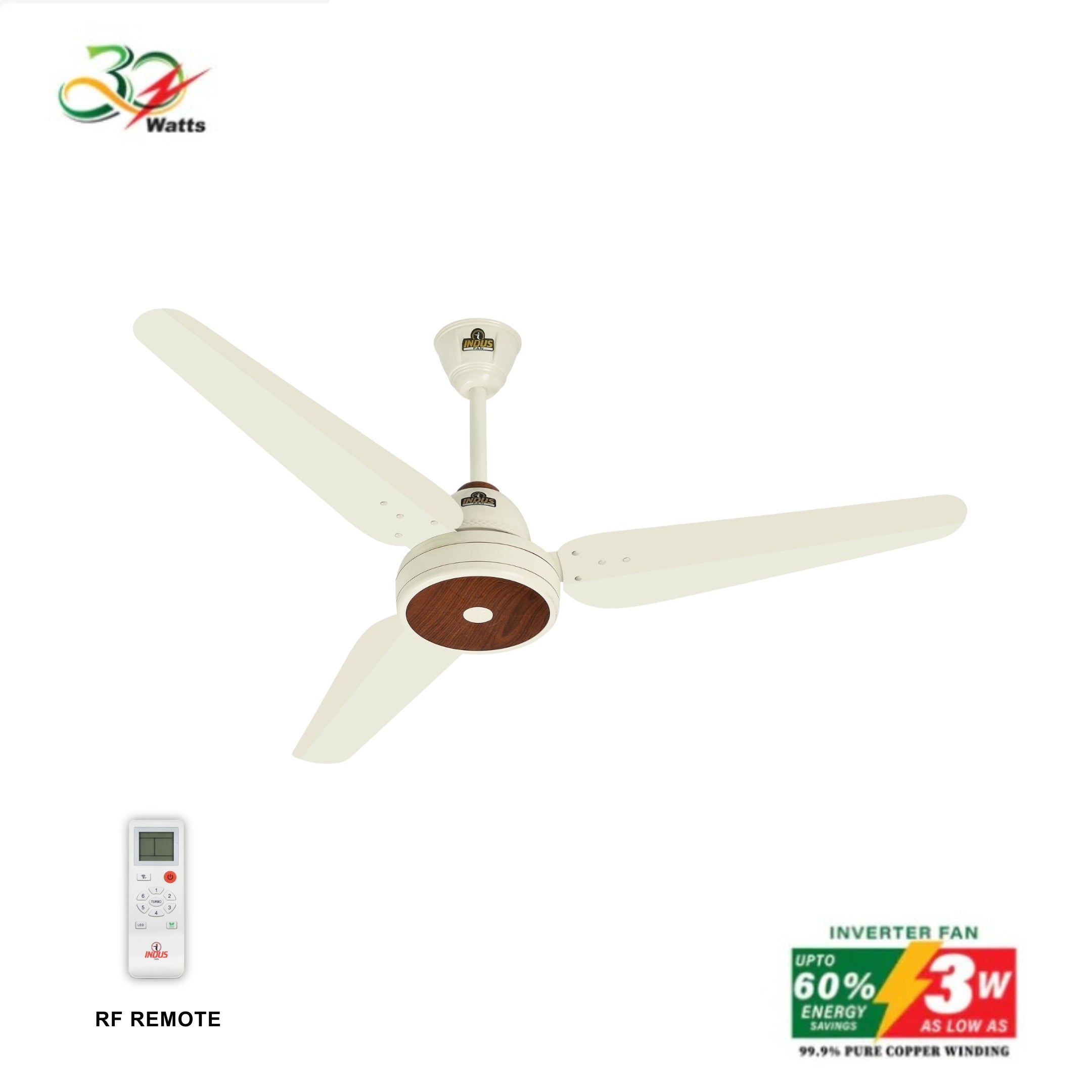
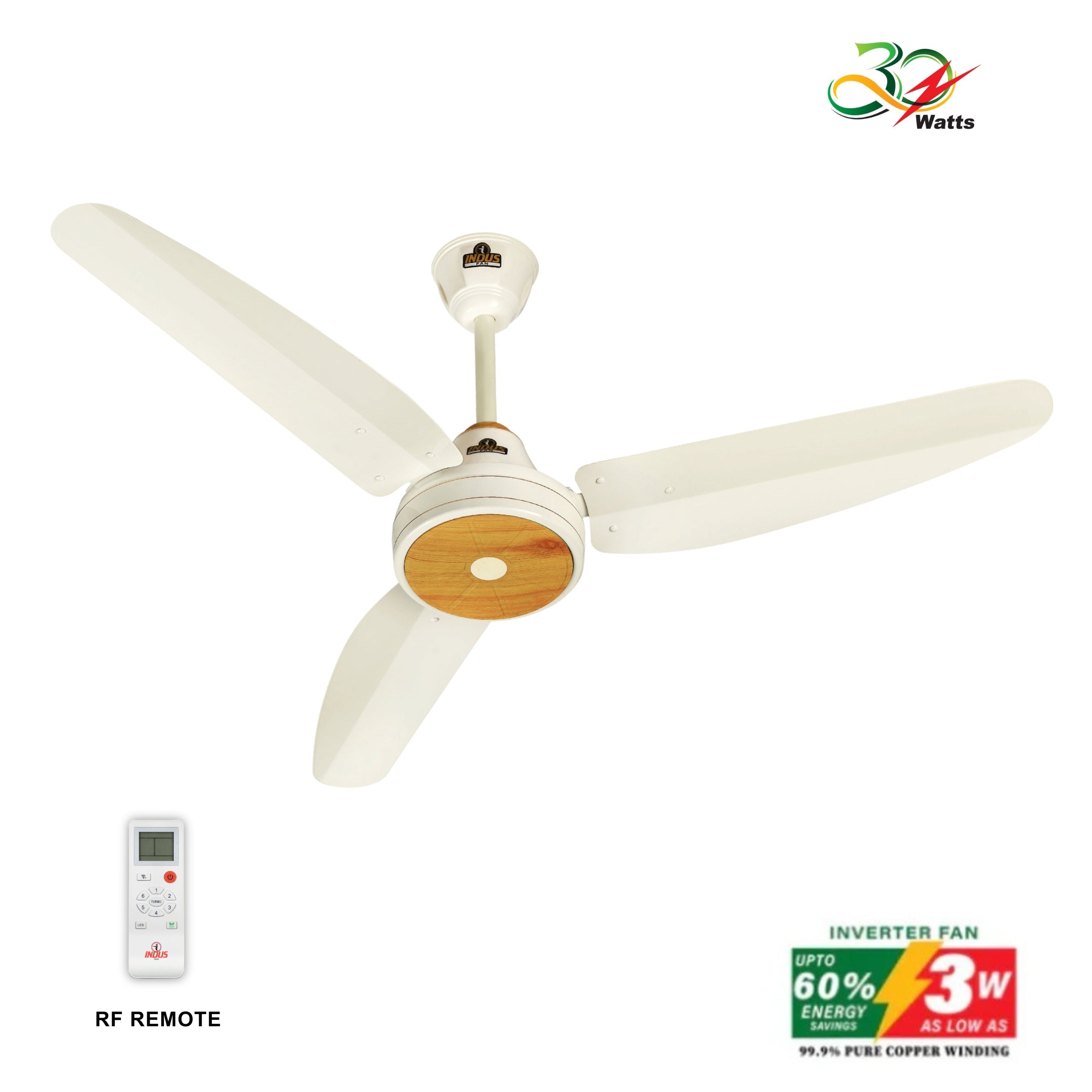
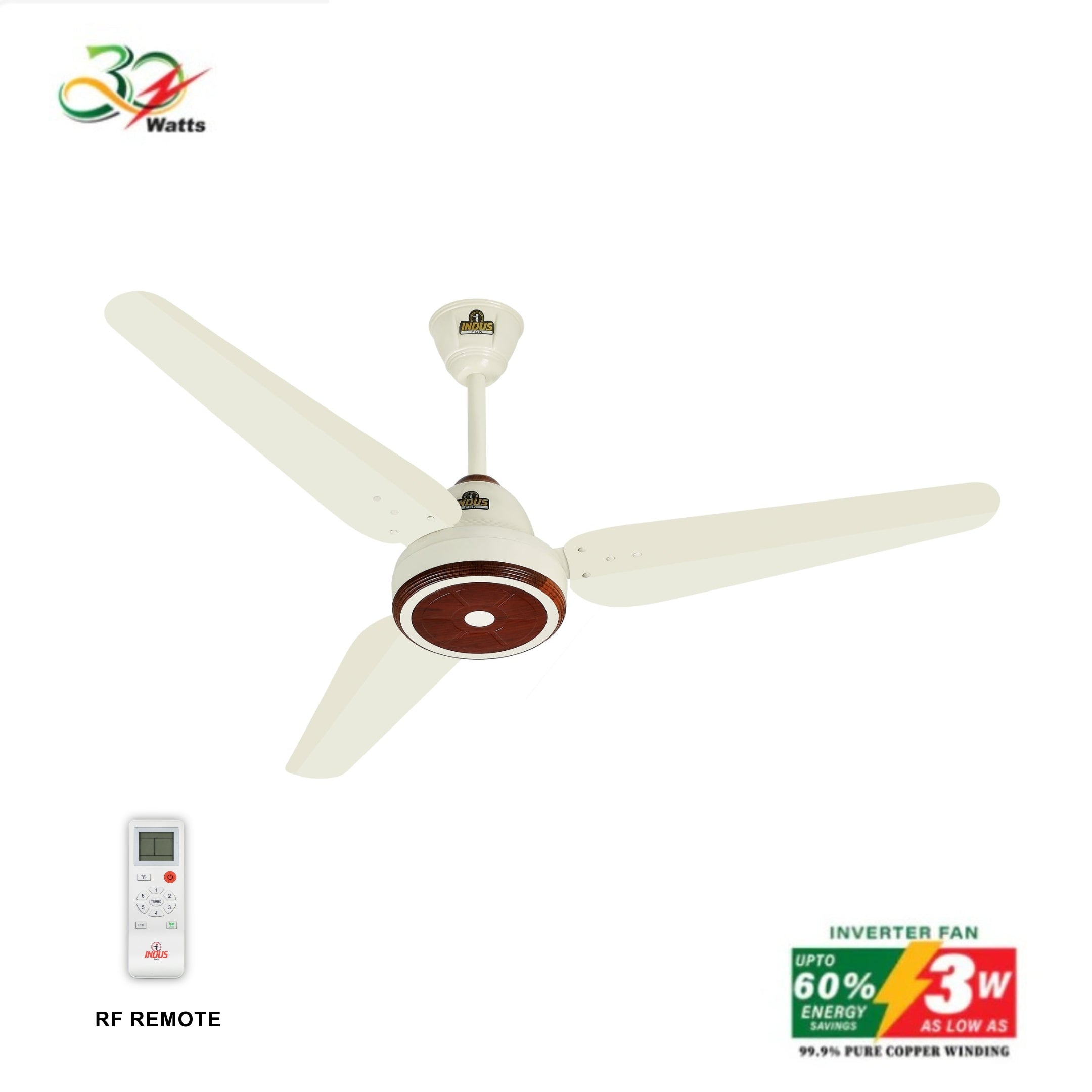
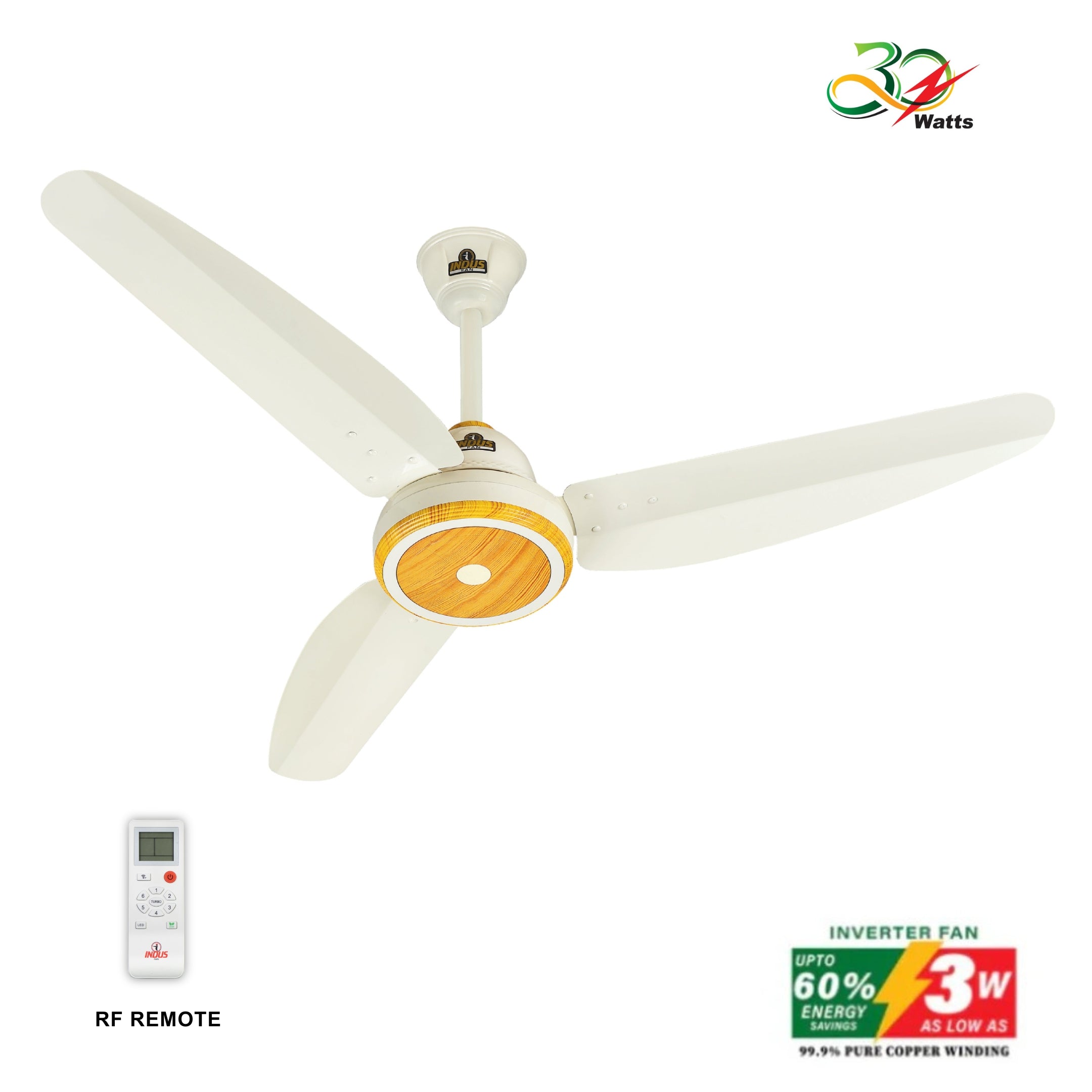
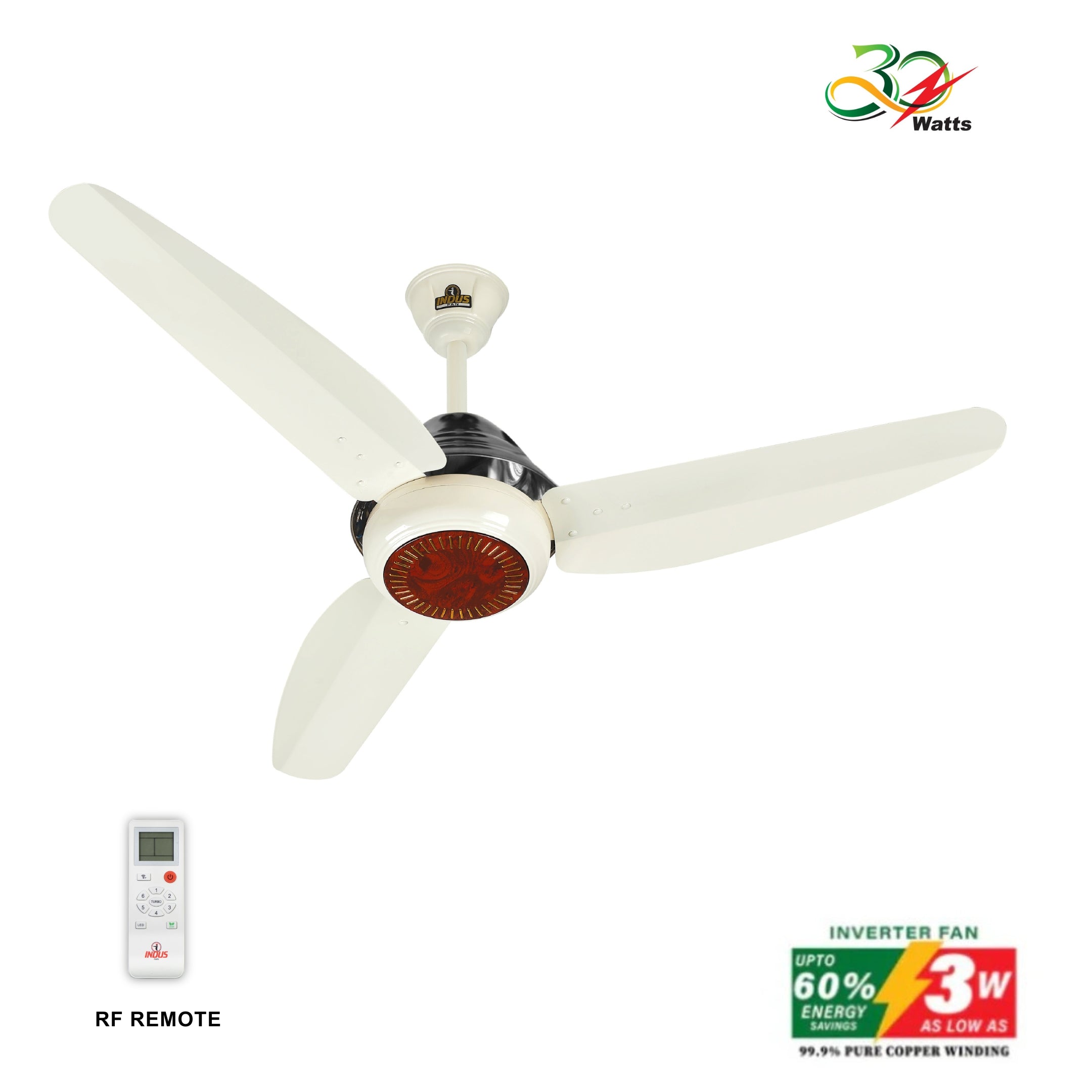
30 Watt Inverter Fan | Energy Efficient Fans & Prices in Pakistan
30 Watt Inverter Fan: Powerful Savings + 10 Smart Benefits
1. What Is a 30 Watt Inverter Fan?
A 30 watt inverter fan is an energy-efficient ceiling fan designed to provide effective airflow while using approximately 30 watts of electrical power under its rated operating conditions. Most modern fans in this category use BLDC, or Brushless Direct Current, motor technology combined with an electronic controller.
The main difference between a 30W inverter fan and a traditional ceiling fan is the way the motor uses electricity. Conventional AC ceiling fans often consume significantly more power, while an inverter fan is designed to achieve useful airflow with much lower energy consumption.
This difference becomes particularly important in Pakistan, where ceiling fans can run for many hours a day. During the summer, a fan may operate throughout the afternoon and continue running all night. As a result, even a relatively small reduction in wattage can become meaningful when calculated over weeks and months.
For households with several fans, the potential difference is even greater. Instead of looking only at the initial purchase price, homeowners should consider the fan's long-term operating cost, efficiency, airflow, warranty, and compatibility with their electrical setup.
If you're comparing different fan technologies, you can also explore the complete ceiling fan collection from Indus Home Appliances, which includes standard AC, inverter, and AC/DC models.
What Does 30 Watts Mean?
The term "30 watt" describes the fan's rated electrical power consumption. However, it doesn't necessarily mean that the fan will consume exactly 30 watts at every speed.
Power consumption can change depending on the speed setting, voltage, motor design, controller, and operating conditions.
That's why buyers shouldn't judge a fan only by its wattage. A good 30 watt ceiling fan should also provide strong airflow, efficient motor performance, reliable speed control, and appropriate coverage for the room.
2. How Does 30W Inverter Fan Technology Work?
The technology behind a modern inverter fan is relatively simple to understand.
Instead of relying on a conventional induction motor, many 30W inverter fans use a BLDC motor. The motor works with an electronic controller that regulates how electrical energy reaches the motor. This allows the fan to adjust its speed efficiently rather than continuously operating the motor in the same manner as a traditional AC fan.
BLDC motors also have fewer mechanical components involved in the motor's operation, which can contribute to smooth and quiet performance.
The electronic controller is another important part of the system. It manages speed and helps the motor operate efficiently across different settings. Depending on the model, the fan may also include a remote control, timer, sleep mode, or multiple speed levels.
Why BLDC Motors Matter
A BLDC motor is one of the main reasons a modern inverter fan can consume significantly less electricity than a conventional fan.
Lower power consumption is especially valuable when the fan is connected to a UPS, battery, or solar system. A fan that requires less electricity places a smaller load on the backup system and can potentially operate for longer.
For example, Indus lists its Marvel 30W inverter fan with a BLDC motor, 30W rated power consumption, 249.6 m³/min air delivery, and 310 RPM.
The exact specifications differ between models, so buyers should always check the product specification sheet before making a decision.
3. Why Are 30 Watt Inverter Fans Becoming Popular in Pakistan?
Electricity consumption is one of the biggest considerations for Pakistani households. Fans are among the most frequently used electrical appliances, particularly during the long summer season.
Unlike an appliance that might run for an hour or two each day, a ceiling fan can easily run for eight, ten, or even more hours. This makes energy efficiency particularly important.
A 30 watt inverter fan addresses this issue by reducing the electricity required for everyday cooling.
There's another reason for its growing popularity: backup power.
During load shedding, many households depend on UPS systems, batteries, or solar setups. A conventional fan can place considerable demand on a battery, especially when multiple fans are running simultaneously.
A low-power inverter fan reduces that load.
This is also why energy-efficient fans are becoming increasingly relevant for households investing in solar energy. Using efficient appliances means that the same solar and battery system can potentially support more loads.
For customers who specifically need dual-power operation, an AC/DC solar fan can be another option. AC/DC fans are designed to work with AC and DC power sources and are particularly useful where uninterrupted cooling is important.
Energy Efficiency and Comfort Can Work Together
One common misconception is that a low-wattage fan must have weak airflow.
That's not necessarily true.
Motor efficiency, blade shape, blade pitch, RPM, and overall aerodynamic design all affect airflow. A well-designed 30W fan can provide strong air circulation while consuming considerably less electricity.
Therefore, when looking for the best 30 watt inverter fan, consider both sides of the equation: how much electricity the fan consumes and how much useful airflow it provides.
4. 30 Watt Inverter Fan Price in Pakistan
The 30 watt inverter fan price in Pakistan varies according to the model, size, motor technology, design, finish, features, and brand.
Current Indus listings show a range of 30W inverter models, including Sparkle, Antique, Crown, Marvel, Marvel Plus, Marvel Diamond, and Tulip. Prices currently range from roughly the low Rs. 12,000s for some models to above Rs. 20,000 for premium designs.
For example, the Sparkle 30W inverter model is currently listed from approximately Rs. 11,899, while the Antique 30W models start around Rs. 13,154–13,852, depending on the variant. Premium options such as Marvel and Marvel Plus are listed above Rs. 20,000, while the Tulip is positioned higher because of its premium design.
| Fan Type | Approximate Current Indus Price Range |
|---|---|
| Entry-level 30W inverter models | Rs. 11,000–14,000+ |
| Mid-range 30W models | Rs. 14,000–20,000+ |
| Premium 30W models | Rs. 20,000–24,000+ |
Prices can change because of promotions, stock levels, finishes, and product variants. Therefore, buyers should verify the current price on the official product page before ordering.
Is a More Expensive Inverter Fan Better?
Not always.
A more expensive fan may offer a premium finish, decorative design, remote functionality, or additional features. But if you're primarily concerned about electricity savings and airflow, a mid-range model may provide better overall value.
Think about where you'll install the fan and how long you'll use it each day. A simple bedroom fan doesn't necessarily need the same decorative features as a fan installed in a formal living room.
The goal isn't to find the cheapest 30 watt inverter fan price in Pakistan. The goal is to find the best combination of price, efficiency, airflow, durability, and warranty.
5. What Makes the Best 30 Watt Inverter Fan?
The phrase best 30 watt inverter fan can mean different things to different buyers.
For one customer, the best model may be the most affordable option. For another, it may be a premium fan with a decorative finish. Someone living in an area with frequent load shedding may prioritize battery efficiency above everything else.
Still, several technical features deserve attention.
A quality BLDC motor is a strong starting point. You should then check airflow, RPM, service value, voltage range, construction quality, and warranty.
Air delivery is particularly important. Two fans can consume a similar amount of electricity but provide different levels of airflow. A fan that moves more air for the same power consumption may offer better efficiency.
For example, the Indus Marvel 30W inverter fan lists an air delivery of 249.6 m³/min and a 310 RPM motor speed.
Copper Motor and Build Quality
Motor construction also matters.
Indus describes its Marvel inverter fan as using a 99.99% pure copper-wound motor and ball-bearing technology.
Copper winding is commonly valued for electrical conductivity and heat management, but buyers should still consider the complete motor design rather than assuming winding material alone determines performance.
Remote Control and Speed Settings
Modern inverter fans often provide more control than traditional fans.
A remote can make it easier to adjust speed from bed or across a room. Timer and sleep functions can also be useful at night.
These aren't essential for everyone, but they're convenient features that can improve the overall user experience.
6. 30 Watt Inverter Fan vs Standard Ceiling Fan
The biggest difference between these two fan categories is power consumption.
A standard AC ceiling fan may consume considerably more electricity than a 30W inverter model. Indus currently describes its standard ceiling fan range as generally using around 75–100W, while its 30W inverter range is designed around approximately 28–32W.
Consider a simple example.
If one fan consumes 90W and another consumes 30W, the 30W model requires approximately one-third as much power under those assumed operating conditions.
That difference becomes significant when the fan runs every day.
| Feature | 30W Inverter Fan | Standard AC Fan |
|---|---|---|
| Motor technology | Commonly BLDC | Commonly induction |
| Power consumption | Around 30W | Often 75–100W |
| Backup power | More efficient | Higher battery demand |
| Solar suitability | Very good | Less efficient |
| Speed control | Electronic | Conventional |
| Initial cost | Usually higher | Usually lower |
| Long-term electricity cost | Lower | Higher |
Of course, actual consumption varies by model and speed.
If you're simply replacing a fan in a room with reliable grid electricity, a standard fan may still make financial sense because of its lower upfront cost. But for households that run fans for long hours or rely heavily on backup power, the energy savings of an inverter model can make the higher initial price worthwhile.
7. How Much Electricity Can a 30 Watt Fan Save?
Let's look at a simple calculation.
Suppose a conventional fan consumes 90W while a 30W inverter fan consumes 30W. If both fans run for eight hours per day, the conventional fan would use:
90W × 8 hours = 720Wh or 0.72kWh per day.
The inverter fan would use:
30W × 8 hours = 240Wh or 0.24kWh per day.
The theoretical difference is therefore 0.48kWh per day.
Over 30 days, that becomes approximately 14.4kWh.
If we use an illustrative electricity rate of Rs. 50 per kWh, the theoretical difference would be:
14.4 × Rs. 50 = Rs. 720 per month per fan.
This is an example rather than a guaranteed bill saving. Your actual savings will depend on your electricity tariff, fan speed, daily usage, household consumption, and the actual power draw of both fans.
The important point is that a fan running eight or more hours every day has a meaningful energy footprint. Reducing its power consumption can therefore contribute to lower overall electricity usage.
For a home with four fans, the same theoretical calculation would produce a difference of approximately Rs. 2,880 per month at that assumed tariff.
This is one reason energy-efficient fans are becoming an attractive long-term investment rather than simply another appliance purchase.
30W Fan or AC/DC Fan?
The two categories are related but aren't identical.
A 30W inverter fan focuses primarily on efficient operation through inverter/BLDC technology. An AC/DC fan is specifically designed to operate from both AC and DC power sources.
If you already have a suitable UPS or inverter system and want a low-power ceiling fan, a 30W inverter fan may be ideal.
If your priority is direct compatibility with battery or solar DC power, consider an AC/DC ceiling fan instead.
8. Which 30 Watt Fan Is Best for Different Rooms?
The best model depends on how the room is used.
For a bedroom, quiet operation and convenient speed control are usually more important than an elaborate decorative design. A remote and timer can also be useful, particularly when the fan operates throughout the night.
For a living room, appearance becomes more important. A premium finish can complement the interior while still providing efficient airflow.
For an office or shop, operating cost and reliability may matter more than decorative features. If the fan runs for ten or twelve hours each day, electricity efficiency can quickly become an important consideration.
For a home with frequent load shedding, the priority should be low power consumption and compatibility with the existing backup system.
If you're comparing inverter fans with regular models, the broader Indus fan collection allows you to compare standard, inverter, AC/DC, pedestal, bracket, and exhaust fan categories in one place.
9. How to Choose the Right 30 Watt Inverter Fan
Before buying, compare more than just the price.
Start with the room size. Then consider the number of hours the fan will run each day. If the fan will be used primarily during load shedding, check your UPS or battery setup before making the purchase.
Next, compare airflow and motor specifications.
A useful comparison should include rated wattage, RPM, air delivery, service value, voltage range, blade size, warranty, remote-control features, and price.
| Specification | What to Look For |
|---|---|
| Power | Around 30W |
| Motor | BLDC/inverter |
| Air delivery | Higher is generally better for similar power |
| Blade size | Match to room |
| RPM | Compare between similar models |
| Voltage | Suitable for your electrical conditions |
| Remote | Useful but optional |
| Timer | Useful for bedrooms |
| Warranty | Clear motor/electronics coverage |
| After-sales service | Important for long-term ownership |
Don't get caught up in marketing terms alone. Ask what the numbers actually mean.
A manufacturer that publishes detailed specifications makes it easier for buyers to compare products objectively.
Frequently Asked Questions
What is a 30 watt inverter fan?
A 30 watt inverter fan is an energy-efficient ceiling fan designed to operate at around 30 watts under rated conditions. Many models use BLDC motor technology and electronic speed control to reduce energy consumption.
What is the 30 watt inverter fan price in Pakistan?
The price varies according to the model, size, design, and features. Current Indus listings show 30W inverter models ranging from roughly Rs. 11,900 for some entry-level options to more than Rs. 20,000 for premium models.
Which is the best 30 watt inverter fan?
There isn't one model that is best for every buyer. The right choice depends on room size, budget, airflow requirements, design preferences, and whether you use UPS or solar backup.
Current Indus options include Sparkle, Antique, Crown, Marvel, Marvel Plus, Marvel Diamond, and Tulip models.
Does a 30 watt inverter fan work on UPS?
Yes, compatible 30W inverter fans can be used with suitable UPS systems. Their low power consumption can help reduce the load on the battery compared with conventional high-wattage fans.
Actual backup time depends on the UPS, battery capacity, battery condition, fan speed, and other connected appliances.
Can a 30 watt fan run on solar power?
A suitable inverter or AC/DC fan can be integrated into a solar system. However, the complete solar setup needs to be correctly sized according to the fan and other household loads.
If direct AC and DC operation is important, consider an AC/DC solar fan from Indus.
How much electricity does a 30 watt fan consume?
At its rated 30W power, running continuously for one hour would theoretically consume 0.03 kWh. Running for eight hours would consume approximately 0.24 kWh.
Actual consumption can vary with speed and operating conditions.
Is a 30 watt fan powerful enough?
Yes, a well-designed 30W fan can provide strong airflow. However, wattage alone doesn't determine cooling performance. Air delivery, blade design, RPM, motor efficiency, and fan size should also be considered.
Is a 30 watt inverter fan better than a 50 watt fan?
Not necessarily. A 30W model uses less electricity, but the 50W model could potentially provide different airflow depending on its design. Compare airflow, efficiency, room coverage, and build quality before deciding.
What size 30 watt ceiling fan should I buy?
Choose the size according to your room. Smaller rooms may suit a 36-inch fan, while 48-inch and 56-inch models can be more suitable for medium and larger spaces. Indus offers different blade sizes across its fan range.
Are 30 watt inverter fans good for bedrooms?
Yes. They're particularly useful in bedrooms because fans often operate for many hours at night. Low power consumption can also make them attractive for homes using UPS or battery backup.
How long can a 30 watt fan run on a UPS?
There is no single answer. Runtime depends on battery capacity, inverter efficiency, battery condition, fan speed, and other loads. A 30W fan generally places less demand on a battery than a conventional 80–100W fan, which can help extend backup time.
Where can I buy a 30 watt inverter fan in Pakistan?
You can compare available models through the Indus 30W inverter fan range. Indus currently lists multiple 30W models, including Sparkle, Antique, Crown, Marvel, Marvel Plus, Marvel Diamond, and Tulip.
10. Final Verdict: Is a 30 Watt Inverter Fan Worth It?
For many Pakistani households, a 30 watt inverter fan can be a smart long-term investment.
The biggest advantage is straightforward: lower electricity consumption. Since ceiling fans often run for many hours every day, reducing their power requirement can have a noticeable impact on overall household energy use.
The benefits become even more relevant when you use a UPS or solar system. A low-power fan puts less demand on your backup equipment, potentially allowing the battery to support the fan for longer.
However, the best purchase isn't necessarily the fan with the lowest wattage or the lowest price.
Look at the complete picture: motor technology, airflow, blade size, RPM, service value, warranty, design, price, and after-sales support.
If you're looking for an affordable energy-efficient option, an entry-level 30W model may be enough. If design and premium finishes are important, models such as Marvel, Marvel Plus, Marvel Diamond, or Tulip provide higher-end options.
Before purchasing, it's also worth comparing the full ceiling fan range in Pakistan to see whether a standard AC, 30W inverter, or AC/DC fan better matches your needs.
Ultimately, the best 30 watt inverter fan is the one that gives your room sufficient airflow while keeping energy consumption low and providing reliable performance over the long term.
For Pakistani homes dealing with high electricity costs, hot summers, and load shedding, that's a combination that makes a lot of sense.


