


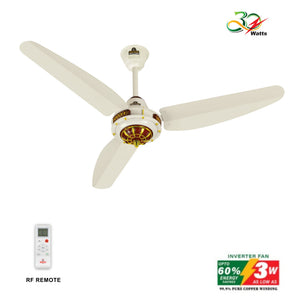
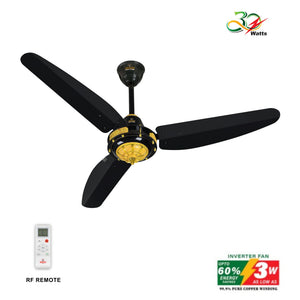
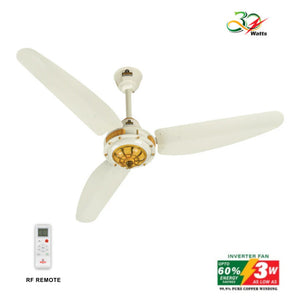
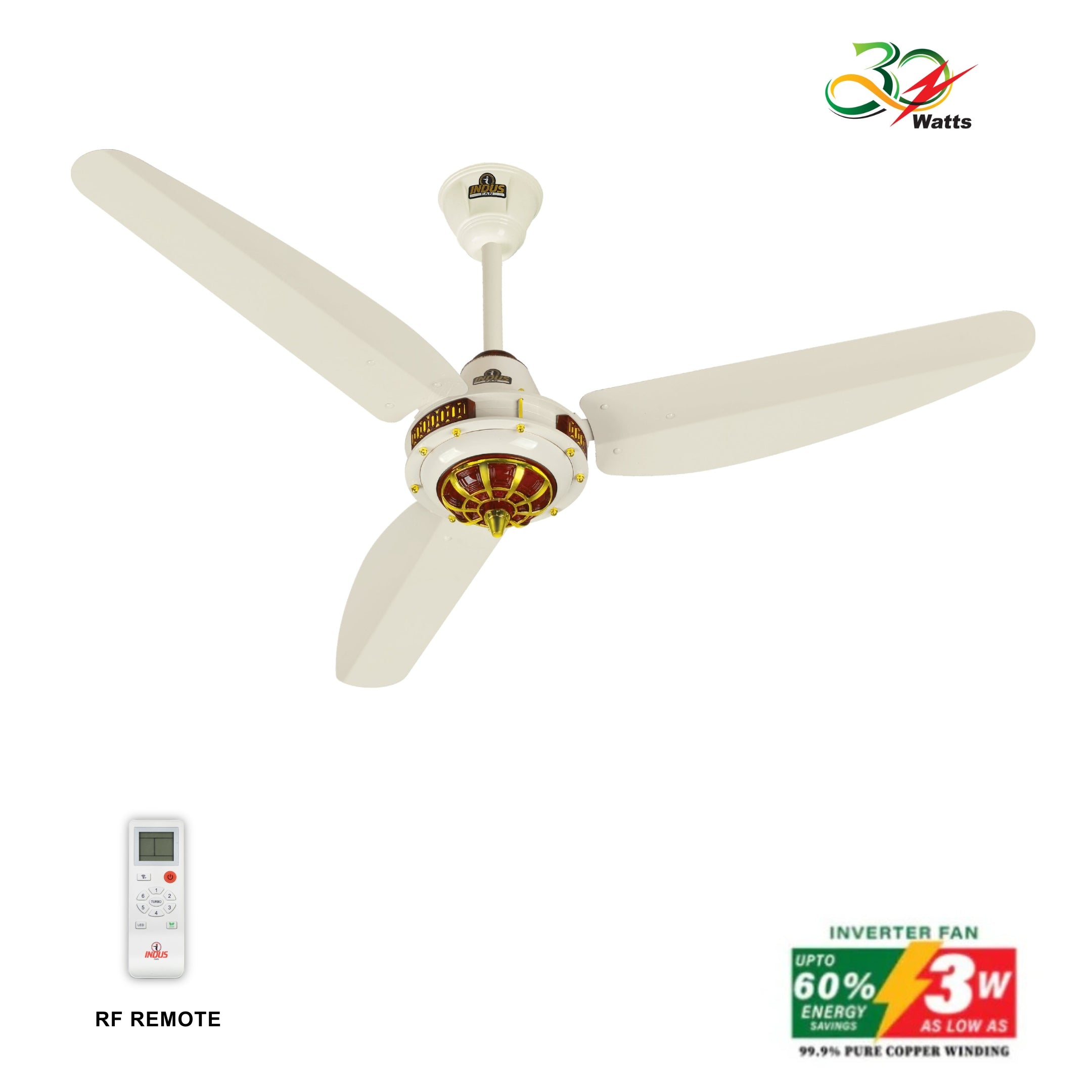
Antique Model Ceiling Fan (30-Watt Inverter Fans)
Compare color
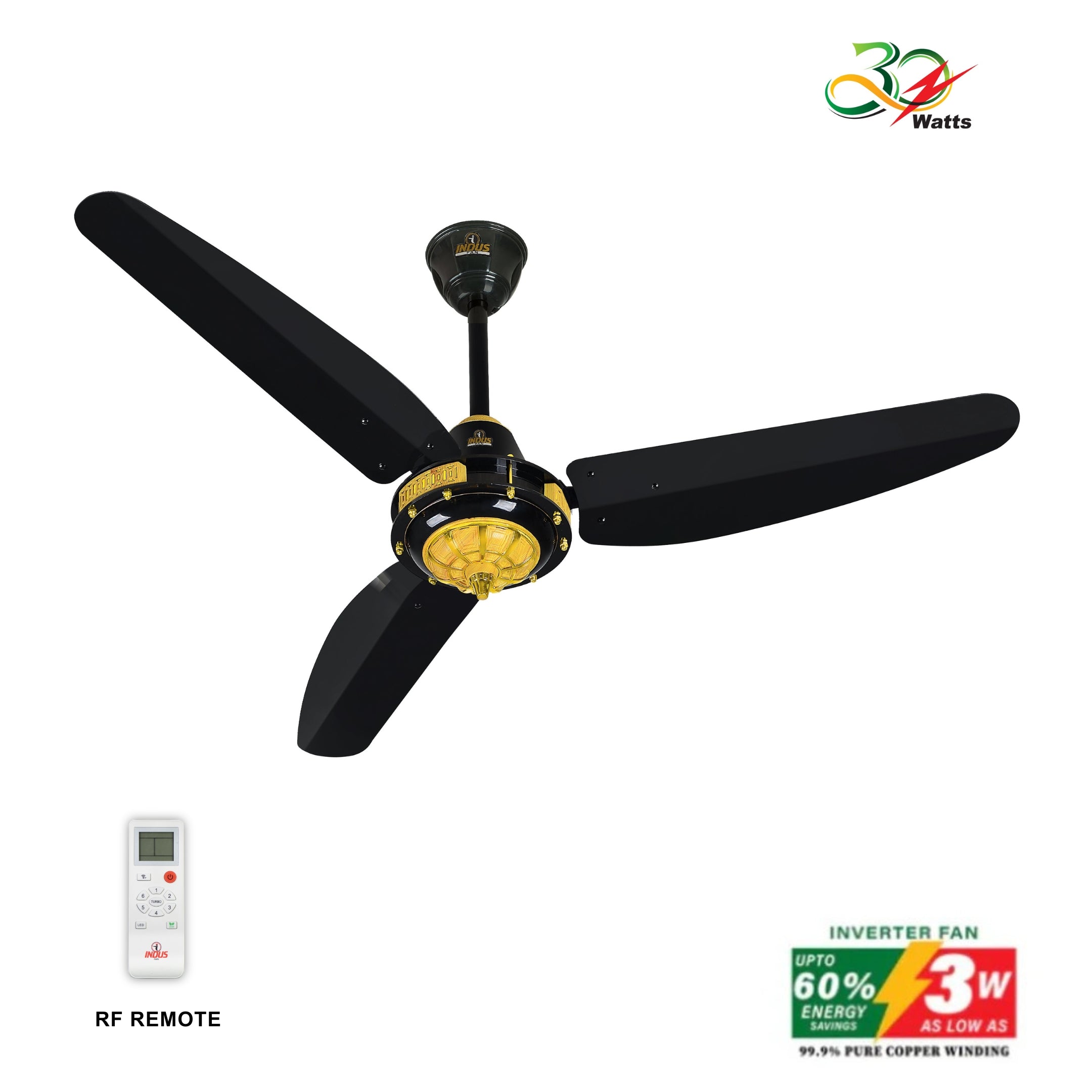
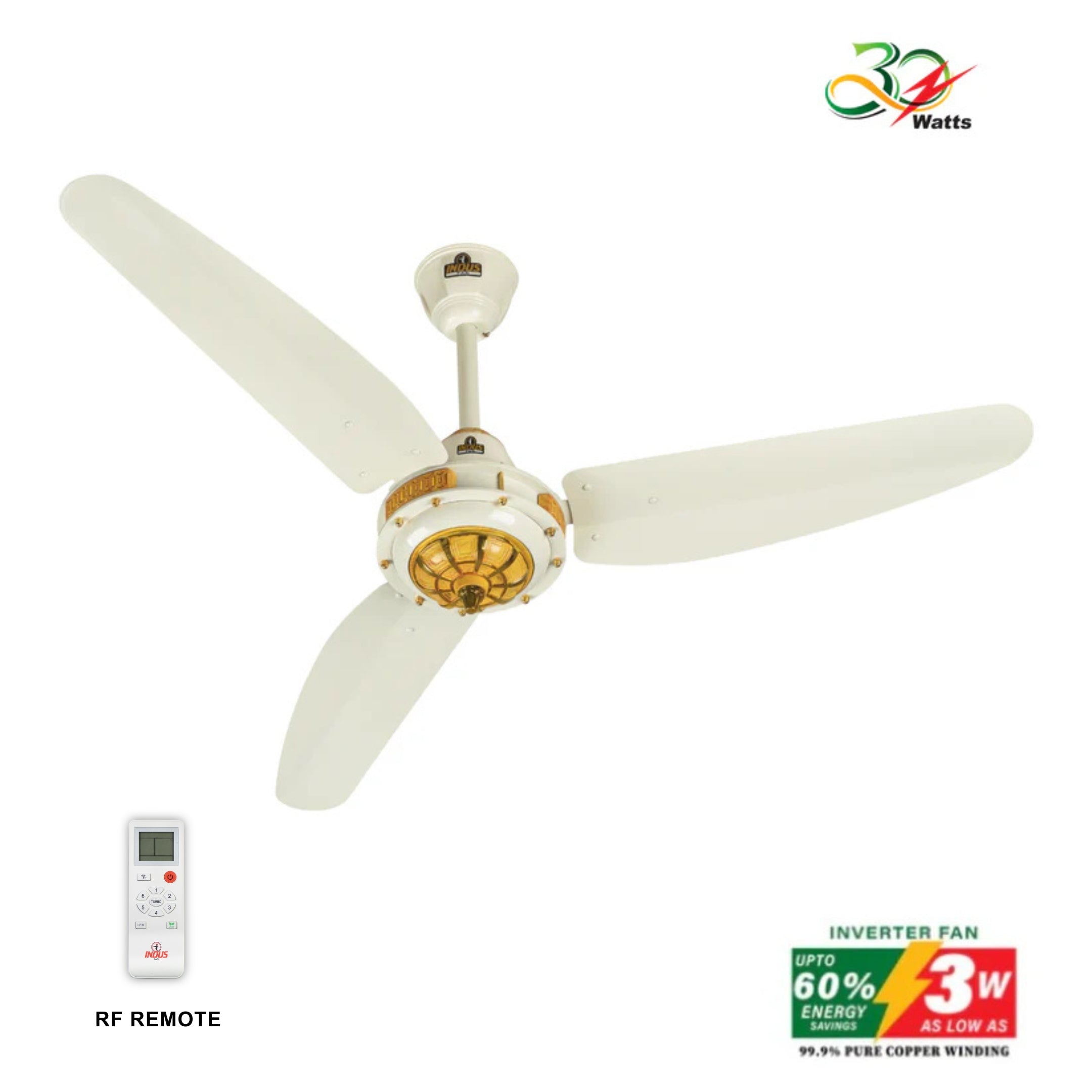
Ask a question
💡 Shipping charges vary by zone. View Zone-wise Shipping Charges
Guarantee Safe Checkout
Antique Model Ceiling Fan (30-Watt Inverter Fans)
Description
| Specification | Details |
|---|---|
| Operating Voltage | 120–240 Volt |
| Operating Frequency | 50 Hz |
| Power Consumption | 30 Watt |
| Service Value | 8.24 m³/min/watt |
| Air Delivery | 249.6 m³/min |
| Rating | ★★★ |
| R.P.M | 345 |
| Body Gross Weight | 5.502 kg |
| Body Net Weight | 4.511 kg |
| Blade Gross Weight | 1.430 kg |
| Blade Net Weight | 1.276 kg |
Best 30 Watt Inverter Fan in Pakistan: 19 Powerful Reasons to Choose an Energy-Efficient 30 Watt Ceiling Fan
If you're looking for a cooling solution that combines modern design, efficient electricity consumption, and reliable everyday performance, a 30 watt inverter fan is worth considering. Rising electricity costs have made energy-efficient appliances increasingly important for Pakistani households. At the same time, frequent voltage fluctuations and load shedding can make conventional fans less practical when you're relying on UPS or backup power.
The Indus Antique Model Ceiling Fan is designed around this need. According to its published specifications, the fan operates at 30 watts, supports 120–240V, delivers 249.6 m³/min of air, and has a service value of 8.24 m³/min/watt. It also uses a 99.99% pure copper motor with ball bearings and operates at 345 RPM.
For buyers comparing the price of 30 watt inverter fan models in Pakistan, efficiency shouldn't be the only consideration. Air delivery, motor construction, voltage range, size, design, durability, and after-sales support all matter. In other words, the cheapest fan isn't automatically the best value.
This guide explains what makes a 30 watt ceiling fan different, how inverter technology works, what to consider when comparing models, and why an energy-efficient fan can make sense for modern Pakistani homes.
What Is a 30 Watt Inverter Fan?
A 30 watt inverter fan is a ceiling fan designed to provide cooling while consuming significantly less electrical power than many conventional ceiling fans.
The term "30 watt" refers to the fan's stated power consumption. Compared with traditional fans that commonly consume substantially more electricity, a 30 watt model can reduce the amount of power required for everyday cooling.
The "inverter" part refers to the motor and electronic control technology used to operate the fan efficiently. Modern inverter fans commonly use BLDC motors, which can provide efficient operation while maintaining useful airflow.
This makes the technology particularly interesting in Pakistan, where consumers often have to consider electricity costs, UPS backup, solar systems, and power interruptions at the same time.
The Indus Antique Model is specified at 30 watts and uses a BLDC-style efficient motor construction with pure copper winding and ball bearings.
How Does Inverter Fan Technology Work?
Traditional ceiling fans generally use AC motors that consume a relatively high amount of electricity during operation. An inverter fan uses electronic control and an efficient motor design to manage operation more effectively.
BLDC Motor Technology
BLDC stands for Brushless Direct Current. Instead of relying on traditional brushes, BLDC motors use electronic commutation.
This design can offer several advantages, including efficient operation, reduced mechanical wear, and smooth performance.
For a household that operates its ceiling fan for many hours every day, even a relatively small reduction in power consumption can become meaningful over time.
Efficient Motor Construction
Motor construction also matters. The Antique Model uses 99.99% pure copper and ball-bearing motor construction according to its published product specifications.
Copper is widely used in electrical motors because of its conductivity, while bearings support smooth rotation.
The result is a motor designed to combine efficient operation with everyday usability.
Why Choose a 30 Watt Inverter Fan?
There are several reasons consumers are moving toward low-power ceiling fans.
The biggest reason is straightforward: electricity consumption matters.
A fan can run for several hours every day, particularly during Pakistan's hot summer months. If a household has multiple fans running simultaneously, the total electricity consumption can add up quickly.
A 30 watt inverter fan offers an alternative by focusing on lower power consumption without treating airflow as an afterthought.
For homes using backup electricity, the advantage can be even more noticeable. A lower-power appliance places less demand on the available battery capacity.
Lower Electricity Consumption
A 30 watt fan requires considerably less power than many conventional high-wattage fans.
This can make it attractive for:
- Bedrooms
- Living rooms
- Offices
- Study rooms
- Shops
- Guest rooms
- Homes using UPS backup
- Solar-powered homes
The key point is that lower wattage can help reduce the electrical load when the fan is operating.
Better Backup Potential
When the electricity goes out, every watt matters.
Suppose you're running a fan from a UPS or battery system. A lower-power fan can potentially operate for longer than a higher-power appliance on the same available battery capacity, although actual runtime depends on the battery, UPS efficiency, load, battery condition, and other connected appliances.
That's why a low-power fan can be particularly useful in areas where power interruptions are common.
Antique Model 30 Watt Ceiling Fan: Product Overview
The Indus Antique Model is positioned as an energy-efficient ceiling fan with a decorative design.
The product page lists three color options: Cream Dark, Black Light, and Cream Light, along with 48-inch and 56-inch size options. The listed product price at the time of checking was Rs. 14,245, although availability and pricing can change.
The fan combines an aesthetic design with the practical requirements of an energy-conscious household.
Rather than choosing between appearance and efficiency, buyers can look for a model that provides both.
This is particularly useful for homeowners who want a fan that works well with modern interiors but doesn't add unnecessary power consumption.
Technical Specifications of the Antique Model
Understanding specifications is important when comparing the best 30 watt inverter fan options.
Here are the specifications published for the Indus Antique Model:
| Specification | Details |
|---|---|
| Power Consumption | 30 Watt |
| Operating Voltage | 120–240V |
| Frequency | 50 Hz |
| Service Value | 8.24 m³/min/watt |
| Air Delivery | 249.6 m³/min |
| RPM | 345 |
| Available Sizes | 48", 56" |
| Motor | 99.99% pure copper |
| Bearing | Ball bearing |
| Colors | Cream Dark, Black Light, Cream Light |
| Net Body Weight | 4.511 kg |
These specifications come from the product information published by Indus Home Appliances.
What Does 8.24 m³/min/watt Mean?
Service value helps put energy consumption into context.
It represents the amount of air delivery generated relative to the electrical power used. A higher service value can indicate better airflow efficiency.
For this model, the published service value is 8.24 m³/min/watt.
Combined with an air delivery figure of 249.6 m³/min, this gives buyers useful information beyond simply looking at the wattage.
After all, a fan that uses less electricity still needs to provide adequate airflow.
Powerful Airflow at Lower Power
One common misconception about low-wattage fans is that lower electricity consumption automatically means weak airflow.
That's not necessarily true.
Motor efficiency, blade design, blade angle, RPM, and overall fan engineering all influence airflow.
The Antique Model uses aerodynamic blades and has a published speed of 345 RPM. Its listed air delivery is 249.6 m³/min.
This combination is important because the purpose of a ceiling fan isn't simply to consume less power. Its job is to circulate air effectively and create a comfortable environment.
Aerodynamic Blade Design
Blade design affects how air is moved around a room.
Aerodynamic blades are intended to improve air movement while allowing the motor to operate efficiently.
For users, this means the fan should be evaluated as a complete system rather than based on wattage alone.
A good 30 watt ceiling fan should balance motor efficiency, blade design, speed, and airflow.
Price of 30 Watt Inverter Fan in Pakistan
The price of 30 watt inverter fan models can vary depending on brand, motor technology, size, design, features, and availability.
At the time this article was researched, the Indus Antique Model displayed a sale price of Rs. 14,245 on its product page. However, the product was marked sold out, and prices or availability may change.
This is why buyers shouldn't compare fans on price alone.
A better approach is to compare:
- Power consumption
- Air delivery
- Service value
- Motor construction
- Voltage range
- Size
- Build quality
- Warranty
- Availability of spare parts
- Brand support
A slightly more expensive fan can sometimes offer better long-term value if it provides better efficiency, reliability, or support.
For the latest availability and current pricing, buyers should check the official product listing before purchasing.
What Makes the Best 30 Watt Inverter Fan?
The phrase best 30 watt inverter fan doesn't necessarily refer to one universal product.
The right fan depends on the room, budget, preferred design, backup system, and expected usage.
However, there are several characteristics worth looking for.
1. Efficient Motor
A quality BLDC motor is one of the most important features.
2. Strong Air Delivery
Low power consumption is useful only when the fan still provides sufficient airflow.
3. Wide Voltage Operation
A wider operating voltage range can be useful in regions where voltage conditions fluctuate.
The Antique Model is specified for 120–240V operation.
4. Reliable Construction
Copper winding and quality bearings can contribute to dependable operation.
5. Suitable Size
A 48-inch and a 56-inch fan won't necessarily be suitable for exactly the same room.
Room dimensions should always be considered.
30 Watt Inverter Fan vs Traditional Ceiling Fan
The difference between a 30 watt inverter fan and a conventional ceiling fan is primarily related to power consumption and motor technology.
| Feature | 30 Watt Inverter Fan | Traditional Fan |
|---|---|---|
| Power Consumption | Around 30W for the listed model | Often higher |
| Motor Technology | BLDC/inverter technology | Conventional AC motor |
| Backup Load | Lower | Higher |
| Energy Efficiency | High | Generally lower |
| Voltage Range | Model dependent | Model dependent |
| Long Daily Use | Suitable | Depends on electricity cost |
| Solar/UPS Use | Attractive option | Higher load |
The exact performance of traditional fans varies by model, so consumers should compare actual specifications rather than assuming every conventional fan performs identically.
Still, the basic advantage of a 30 watt model is clear: lower power consumption can be especially useful when electricity costs and backup power are important considerations.
Is a 30 Watt Ceiling Fan Good for Pakistani Homes?
Yes, a 30 watt ceiling fan can be a practical choice for Pakistani homes, particularly for customers focused on energy efficiency.
Pakistan's climate means ceiling fans are often used for extended periods. During hot months, a fan may run throughout the day and night.
This makes power consumption an important part of the buying decision.
A low-power fan can also be useful for households that use:
- UPS systems
- Solar panels
- Battery backup
- Hybrid power systems
However, room size and airflow requirements should always be considered before selecting the fan size.
Ideal Applications for the Antique Model
The Antique Model's decorative appearance makes it suitable for different residential and commercial environments.
Bedrooms
Bedrooms are one of the most common places for ceiling fans because fans may operate continuously overnight.
Lower power consumption can be particularly useful when the fan runs for many hours.
Living Rooms
A 56-inch option can be considered for larger rooms where appropriate air circulation is required.
Study Rooms
Efficient and smooth operation can make an inverter fan useful in areas where people spend extended periods reading or working.
Offices
Businesses can also benefit from energy-efficient fans because offices may operate multiple fans for several hours every day.
How a 30 Watt Inverter Fan Can Help During Load Shedding
Load shedding is one of the strongest reasons to consider energy-efficient appliances.
When you're running a fan on a battery or UPS, the available energy is limited.
A fan consuming 30 watts places a smaller electrical load on the backup system than a higher-wattage appliance.
For example, if two fans are running during an outage, selecting efficient models can make the total backup load easier to manage.
Of course, actual UPS runtime depends on battery capacity and system efficiency. So, it's best not to assume a specific number of hours without knowing the complete backup setup.
Still, the principle is simple: lower power consumption generally means less energy is required for the same operating period.
Maintenance Tips for Long-Term Performance
Even the best 30 watt inverter fan needs basic maintenance.
Dust can accumulate on blades, the motor housing, and other components over time. A dusty fan may not perform as efficiently as a clean one.
Here are some practical maintenance tips:
Clean the Blades Regularly
Dust buildup can affect airflow and make the fan appear less efficient.
Check for Unusual Noise
If you notice unusual sounds, vibration, or changes in operation, have the fan inspected.
Keep Electrical Connections Secure
Electrical connections should be checked by a qualified technician when required.
Don't Ignore Performance Changes
A noticeable change in speed or airflow can indicate that the fan needs attention.
Regular maintenance is simple, but it can help preserve performance and extend the useful life of the appliance.
How to Choose the Right 30 Watt Inverter Fan
Before purchasing, ask yourself a few practical questions.
What Is the Room Size?
A larger room may require a larger blade size and stronger air circulation.
How Many Hours Will the Fan Run?
If your fan operates for many hours every day, energy efficiency becomes more important.
Do You Use UPS Backup?
If yes, a low-wattage fan can help reduce the backup load.
Do You Have Solar Power?
Energy-efficient appliances work particularly well in systems where available electricity is limited.
Is Design Important?
A ceiling fan is also part of your interior. Choose a color and design that fits the room.
Is the Product Available?
Availability matters. A great fan isn't much use if the required size or color isn't currently available.
At the time of research, the Antique Model product page showed the listed variants as sold out, so availability should be confirmed before purchase.
Why Service Value Matters When Comparing Fans
Many shoppers look only at wattage.
That's understandable, but it doesn't tell the complete story.
Imagine two fans. Both consume 30 watts, but one produces substantially better airflow. In that situation, the second fan may offer better practical value.
That's where service value becomes useful.
The Antique Model has a published service value of 8.24 m³/min/watt.
This allows buyers to consider energy consumption and airflow together.
When comparing the best 30 watt inverter fan options, look beyond marketing phrases and check the actual technical specifications.
Why Indus Is a Relevant Choice for Pakistani Buyers
Indus Home Appliances is based in Gujranwala, Pakistan, and its product range includes energy-efficient inverter fans designed for local household requirements.
The Antique Model specifically combines a decorative design with 30-watt power consumption, a 120–240V operating range, aerodynamic blades, and a pure copper ball-bearing motor.
The company's official product information can be checked directly before purchasing.
View the official Antique Model 30-Watt Inverter Fan
For buyers researching ceiling fans in Pakistan, checking the manufacturer's specifications is always a smart move.
Frequently Asked Questions About 30 Watt Inverter Fans
1. What is a 30 watt inverter fan?
A 30 watt inverter fan is an energy-efficient ceiling fan designed to operate with approximately 30 watts of power consumption under its specified operating conditions. It commonly uses efficient motor technology such as BLDC to provide airflow with lower electricity consumption.
2. What is the price of a 30 watt inverter fan in Pakistan?
The price varies by brand, model, size, design, and features. The Indus Antique Model was listed at Rs. 14,245 when checked, although availability and pricing can change.
3. Which is the best 30 watt inverter fan?
There isn't one universal answer because the best fan depends on your room size, budget, airflow requirements, design preference, and backup system. Look for a model with strong airflow, efficient motor technology, suitable voltage range, reliable construction, and appropriate blade size.
4. Does a 30 watt ceiling fan save electricity?
A 30 watt fan can consume substantially less electricity than many conventional higher-wattage fans. Actual savings depend on the alternative fan, operating hours, electricity tariff, and operating conditions.
5. Can a 30 watt inverter fan run on UPS?
A 30 watt inverter fan can be suitable for UPS use because its lower power consumption places less demand on the backup system. Actual runtime depends on the UPS, battery capacity, battery condition, and other connected loads.
6. Is a 30 watt inverter fan suitable for solar systems?
Yes. Its relatively low power consumption can make it a practical option for homes using solar or battery-based systems. However, the complete solar setup should be sized according to the home's total electrical load.
7. What is the airflow of the Indus Antique Model?
The published air delivery for the Indus Antique Model is 249.6 m³/min, with a service value of 8.24 m³/min/watt.
8. What voltage does the Antique 30 watt fan support?
The published operating voltage is 120–240V, with an operating frequency of 50 Hz.
9. What sizes are available?
The product page lists 48-inch and 56-inch size options. Availability can vary depending on the selected variant.
10. Is the Indus Antique Model available in different colors?
Yes. The product page lists Cream Dark, Black Light, and Cream Light variants.
11. What type of motor does the fan use?
The product information describes a 99.99% pure copper motor with ball-bearing construction and highlights efficient, quiet operation.
12. Should I choose a 48-inch or 56-inch fan?
The right size depends on your room dimensions, ceiling height, furniture arrangement, and required airflow. Larger rooms may benefit from larger blade coverage, but the manufacturer's recommended application should also be considered.
Final Verdict: Is a 30 Watt Inverter Fan Worth It?
For households looking to reduce electricity consumption while maintaining practical cooling performance, a 30 watt inverter fan is a compelling option.
The Indus Antique Model brings together several features that matter to Pakistani consumers: 30-watt power consumption, 120–240V operation, 249.6 m³/min listed air delivery, 345 RPM, aerodynamic blades, and a 99.99% pure copper ball-bearing motor.
More importantly, the decision shouldn't be based on wattage alone. When comparing the price of 30 watt inverter fan models, consider airflow, service value, motor construction, room size, backup requirements, warranty, availability, and brand support.
If your priority is lower energy consumption, especially for long daily operation or UPS and solar applications, a 30 watt ceiling fan can be a smart upgrade from a conventional high-power model.
In short, the best 30 watt inverter fan is the one that gives you the right balance of airflow, efficiency, reliability, design, and price for your specific room and usage. For buyers considering the Indus Antique Model, checking the official product page for the latest price, available variants, and stock status is the best next step.
With electricity costs remaining an important concern for Pakistani households, energy-efficient appliances aren't just a trend—they're becoming a practical part of modern home planning.
Additional Information
| Color |
Cream Dark, Black Light, Cream Light |
|---|---|
| Size |
48", 56" |


